

The scientific literature seems to contradict the popular belief that runners must strength train to run faster races. All the studies summarized in Table 1 found that subjects increased muscular strength following the strength training intervention and did so without an increase in muscle mass. This would certainly be beneficial for distance runners, since an increase in muscle mass would likely impair running economy and endurance performance. Changes to Achilles tendon stiffness and motor unit recruitment are possible candidates responsible for strength training’s effect on running economy (Albracht & Arampatzis, 2013; Bohm et al, 2021; Fletcher & MacIntosh, 2017). Bohm et al. (2021) found a 4% significant increase in running economy accompanied by a 10% significant increase in plantar flexor muscle strength and 31% significant increase in Achilles tendon stiffness after 14 weeks of isometric ankle plantar flexion exercise. In contrast, Fletcher et al. (2010) found no changes in running economy or tendon stiffness after 8 weeks of plantar flexion exercise.
The Philosophy of Bodyweight Strength
We explored subgroup analyses of five aspects of intervention types, contact volume, training duration, training frequency, and sports explosive demand. While there is a lack of confidence in the equipment, the performance specifications for the equipment indicate a speed range of 1–890 MPH, a target acquisition time of 0.01 seconds, and an accuracy of ±0.3%. The starting position is to stand 20 cm away from the wall in the sagittal direction with both feet together, then jump up as high as possible and make a dot with a fingertip on the wall. We measured and recorded the distance between the point taken while standing and the point taken by jumping. Athletes can use these exercises to improve their performance in their sport, but other people may also benefit from this training.
Popular posts
This era also saw the establishment of fitness advocates who began to popularize structured resistance training routines. In the world of fitness, the variety of exercise routines available can be overwhelming. Among the most popular forms of bodyweight training are calisthenics and plyometrics.
Acknowledging the lack of evidence in this realm, recommendations for the volume dosage for plyometric training and a hierarchy of plyometric exercises progression are provided. Temporal overload can be accomplished by concentrating on executing the movement as rapidly and intensely as possible. The temporal overload, or keeping the time to rebound (amortization phase) as short as possible, is one best nutrition tracker apps of the keys to performing plyometric exercises for increased power production.
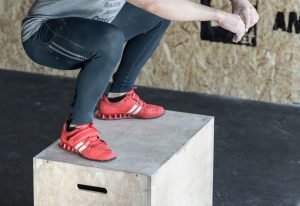
This is why having someone by your side who will monitor your posture and movements is key. Yes, plyometrics is specifically designed to improve speed and agility by training your body to generate maximum force in a short amount of time. If you are looking to improve explosiveness, power, and agility, plyometrics may be a better choice for you. On the other hand, if you are looking to build strength, endurance, and flexibility, calisthenics may be a better option. It targets different areas of the body and can help to improve cardiovascular endurance, power, and agility. Plyometric exercises can also help to improve balance and coordination, which are important aspects of overall fitness.
- Although runners and rugby players differ in physiological profiles, their shared neuromuscular development goals—such as power output and agility—justify pooled analysis with stratified interpretation.
- Recently, Lesinski et al. [58] observed small-to-medium effects of plyometric training on muscle power of lower limbs in children and adolescent athletes.
- For the THT, a tape measure was fixed to the ground, perpendicular to a starting line.
- Ultimately, the key to achieving your fitness goals is to find an exercise program that you enjoy and can stick to over the long term.
- The primary objective of ballistic exercises is to enhance power and explosiveness by utilizing the body’s natural stretch-shortening cycle (SSC).
- A person should work with a trainer on an individualized training plan.
The rise of calisthenics: All you need to know about bodyweight training
There is currently no evidence that any muscle strength improvements or altered motor unit recruitment achieved from strength training transfers to running (Trowell et al, 2020), during which force is applied to the ground much more rapidly. A few adverse effects of PT may occur in players; therefore, strength training can be used instead of PT to improve muscle strength of the quadriceps, sprinting, and lower limb functional performance in non-elite soccer players. However, strengthening of the antagonist muscle, i.e., the hamstring, should also be performed along with quadriceps strengthening, as suggested in previous studies, to prevent hamstring injuries. Plyometric exercises are specifically designed to improve the speed at which your muscles contract.
Advantages Of Plyometric Workouts
The most common among them are aquatic plyometrics (Robinson et al., 2004) and plyometric exercises with a weight vest (Khlifa et al., 2010), elastic bands (pulling downward) (Argus et al., 2011) and dumbbells (Markovic et al., 2011). The ground contact time (CT) during a jump is a basic parameter differentiating assisted and resisted methods. Assisted plyometrics provides shorter CT (Tufano et al., 2018), while resisted plyometrics results in longer CT (Dell’Antonio et al., 2016; Makaruk et al., 2010) as compared to the traditional plyometrics. Plyometrics may not be suitable for individuals with certain medical conditions, a history of joint problems, or those who are overweight.
The lack of significant improvement in CMJ and SJ power output may be related to the training regimen. This systematic review and meta-analysis combined the effects of plyometric training and its derived methods (e.g., sand training, weighted vest training, complex training) on various physical fitness parameters in adult athletes. These parameters included body composition, cardiovascular endurance, lower limb strength, lower limb explosive power, agility, and speed.
Improve your balance with tai chi this winter
Start with calisthenic exercises and slowly incorporate plyometric moves to rapidly gain strength and endurance. Because of the frequent jumping, you are putting a lot of stress on your knees and ankles when performing plyometrics. Someone who has suffered a joint injury should not be trying to do exercises that can damage their joints. Even if you use mats to make the impact less strong on your joints, this is not enough to protect you from injury if you have poor joint health. If this is your case, you should opt for lower-impact calisthenic exercises. One of the cons of calisthenics is that you are not going to gain in speed and power as much as you would by doing plyometrics.

The effects of strength training on distance running performance and running injury prevention
If you’re new to plyometrics or have specific concerns, consult with a fitness professional or coach who can provide guidance and ensure your safety. A trained professional can help design a program tailored to your fitness level and goals while minimizing the risk of injury. One of the most significant concerns with plyometrics is the risk of injury. The high-impact nature of these exercises, combined with improper form or overuse, can lead to injuries such as sprains, strains, and stress fractures. Plyometric exercises place a lot of stress on the joints, particularly the knees and ankles, which can be problematic for individuals with pre-existing conditions. The high-intensity nature of plyometrics can contribute to calorie burning and weight management.
Nutrition for Muscle Growth
From there, you can customize your calisthenics training using different styles (see below) depending on your goals. Endomondo newsletter has tips, workout plans, and resources that will help you in your fitness journey. We uphold stringent sourcing criteria and depend on peer-reviewed studies and academic research conducted by medical associations and institutions. For more detailed insights, you can explore further by reading our editorial process.
Also, knowing how to properly perform base exercises helps to prevent injury and muscle strain. Use calisthenics to build a solid strength base and then integrate plyometrics to enhance your explosive power. This approach provides a balanced routine, leveraging the best of the calisthenics vs plyometrics disciplines for comprehensive fitness. Plyometrics, also known as jump training, focuses on explosive movements to increase power and speed. This form of exercise focuses on developing strength, flexibility, and endurance without needing any equipment.
Major Benefits of Plyometrics
Kettlebell (KB) training has become one of the most popular fitness trends in the United States in recent years. Described as “cannonballs with handles,” KBs can be used in a variety of ways with the goal of improving overall physical conditioning. Anecdotal reports about KBs indicate that they are easy to use, require little space, are highly portable, and are very efficient for people who have little time to exercise. They can also be used as an alternative to traditional weightlifting or powerlifting because the exercises can be performed unilaterally or bilaterally in any plane. KBs come in a variety of weights, and KT can progress from simple full-body exercises to more complex exercises that include rotations.
Cons of Plyometric Training
The study selection process is illustrated in the PRISMA flow diagram (Fig. 1). Anyone starting a new exercise regimen should speak with a doctor first to check whether they need to take any particular precautions to protect their health. But, as with all exercise, there are potential benefits and limitations of callisthenics. The Oxford Dictionary says the term callisthenics – which is said to be based on the Greek word κάλλος or kállos (meaning beauty) and σθένος or sthenos (meaning strength) – first started showing up in popular discourse the early 1800s.
Only a few studies have measured the effect of heavy strength training on running performance. Of the studies finding a significant improvement, running performance improved by 2 to 4 percent. While improved economy has often been the explanation for why performance improved in these studies, how or why performance was improved remains unclear, since an improvement in performance has been found even with no improvement in economy (Damasceno et al, 2015). It has yet to be determined that strength training results in faster real-life race performance.
About The Author: BridgeShowroom
Since 2011, BRIDGE SHOWROOM has been representing Europe's finest designers in America.
We are partners, linking together retailers and designers.
More posts by BridgeShowroom